The short answer
Judge the van by its records, not its odometer. Ask for the service history and, on a fleet van, the engine hours, and compare them with the maker’s schedule for hard use. Then check what upfits left behind (holes in the floor and roof should be sealed), the doors, rust, tires and leaks, and drive it cold.
Registered in the Northern Virginia emissions area (which includes Stafford County), most vans need an emissions test every two years; the four newest model years are exempt. Every Virginia van also needs the yearly safety inspection.
Mileage, hours and records
A work van’s odometer says how far it went, not how hard it worked. Two vans with the same miles can have lived very different lives: one on the highway between job sites, the other idling at curbs on a delivery route or carrying its full rated load every day. The makers’ own maintenance schedules show the difference.
- Ford Transit. Ford’s 2018 Transit manual says to expect the oil-change message every 7,500 to 10,000 miles in normal use, every 5,000 to 7,499 with moderate to heavy loads or extended idling, and every 3,000 to 4,999 at maximum load. For “extensive idling or low-speed driving for long distances, as in heavy commercial use (such as delivery…)”, Ford also moves the gas engines’ spark plugs from every 100,000 miles to every 60,000 (Ford 2018 Transit owner’s manual, Scheduled Maintenance).
- Ram ProMaster. Ram’s 2026 handbook says oil changes should never go past 10,000 miles, 12 months or 350 hours of engine run time, whichever comes first, and that the hours are “generally only a concern for fleet customers” (Ram 2026 ProMaster owner handbook).
So ask what the van did, then read the records against that. A Transit that ran a delivery route but had its oil changed only at the normal-use spacing was serviced less often than Ford’s guide expects for that work.
Engine hours
Idling adds engine hours without adding miles. Ford’s 2018 Transit manual puts an Engine Hours screen in the dash menu, under Information, and its service record pages have a line for engine hours. On a van that shows them, write the hours down next to the miles and ask the seller how the van was used. On one that doesn’t, ask whether the service records noted them.
The big services at high mileage
Past about 100,000 miles, look for the scheduled jobs that cost more than an oil change. Schedules change by model year and engine, so check the owner’s manual for the van you’re looking at; these are two examples.
- 2018 Ford Transit: engine coolant first at 100,000 miles or six years, then every 50,000 miles or three years; spark plugs on the 3.5L and 3.7L gas engines every 100,000 miles (60,000 in delivery-type work); automatic transmission fluid and filter every 150,000 miles.
- 2026 Ram ProMaster (gas): spark plugs every 100,000 miles, engine coolant at 10 years or 150,000 miles, brake fluid every two years.
Both makers tell owners to keep every receipt (Ford: “Keep all receipts for completed maintenance with your vehicle”; Ram: “Retain all receipts”). If a company fleet ran the van, ask for the fleet’s maintenance printout. A van with no records at all may still be fine, but budget for the services its mileage calls for.
How to run the VIN for open recalls and read a history report is in how to judge a used van’s reliability. The recalls to check model by model are listed in the ProMaster vs Transit comparison and, for the Chevrolet Express, the three-way comparison.
Shelving, racks and partitions
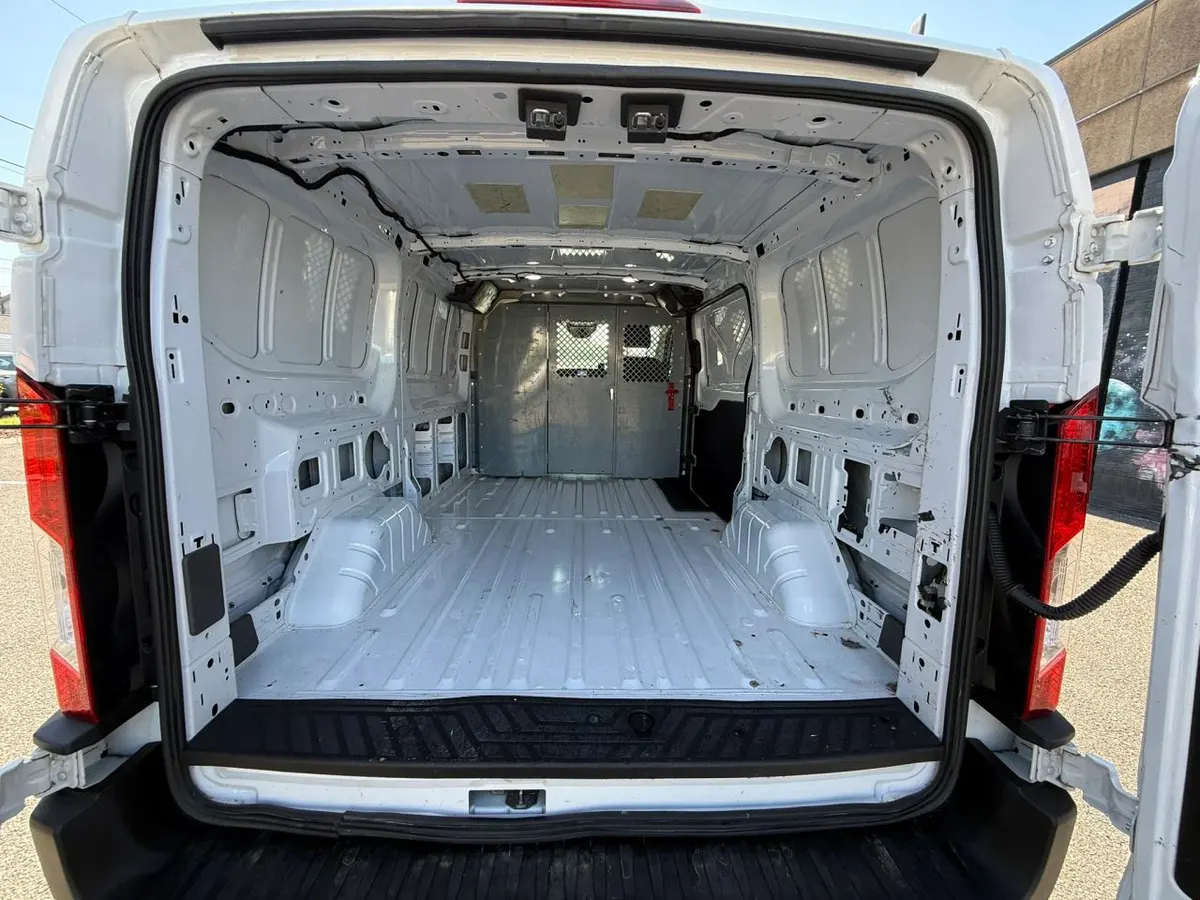
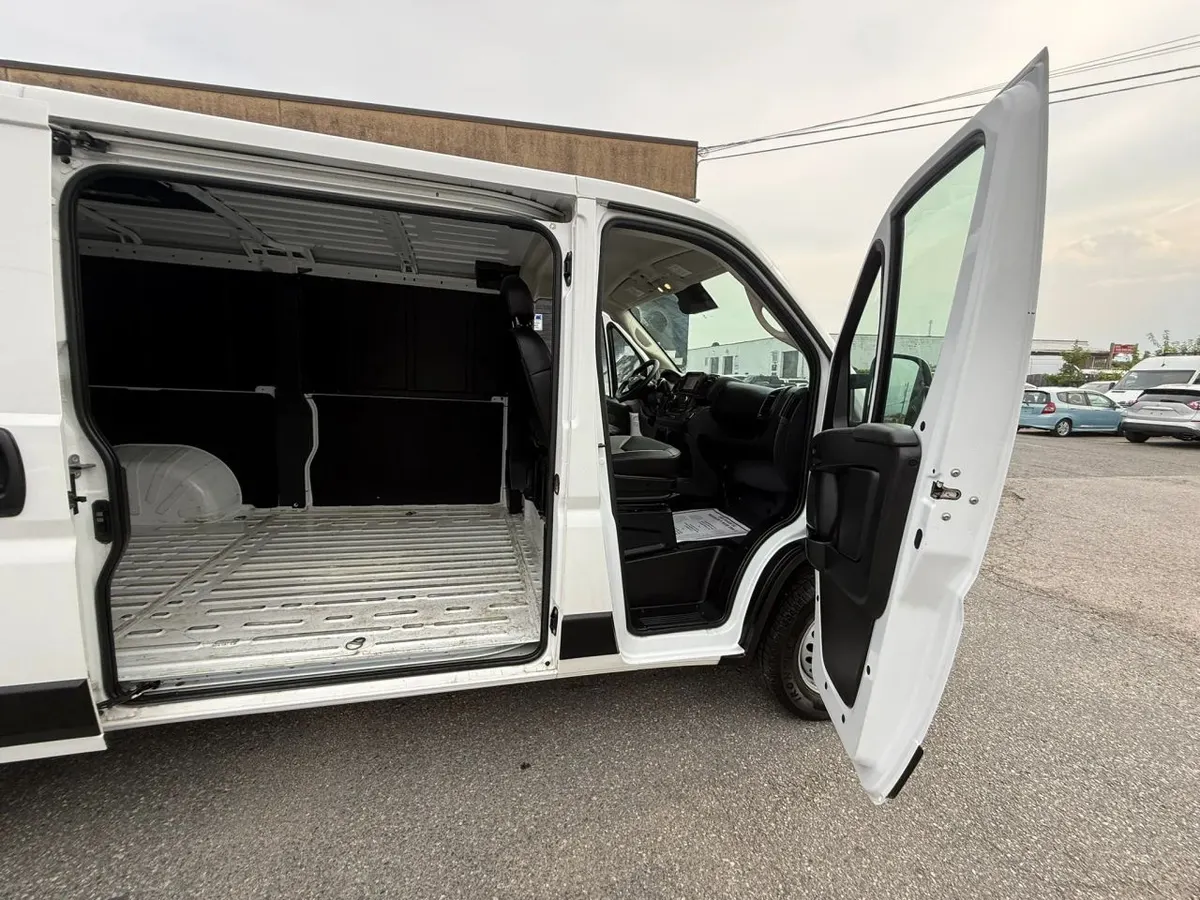
Many used cargo vans have had something bolted in: shelving and bins, a ladder rack, a partition behind the seats. What’s still in the van counts against its payload; what was taken out can leave holes that let in water and rust.
Shelving and bins
Shelving that stays is weight you carry on every trip. Subtract it from the limit on the tire and loading label on the driver’s door pillar before you plan loads; payload by weight class shows what the vans are rated for when new. Grab each unit and pull: it shouldn’t move, and the drawers and latches should close.
Shelving that’s gone leaves its bolt holes. Ford’s upfitter manual for the Transit (2020 model year manual) says every fixing through the floor, sides or roof must be sealed, and cut or drilled metal edges repainted. Virginia’s safety inspection rejects a floor with holes that let exhaust into the van, other than normal drain holes, unless they were repaired by welding or with a metal patch riveted, screwed or welded on. Lift the floor covering and look at every old hole: sealed, patched or open, and whether rust has started around it.
Ladder and roof racks
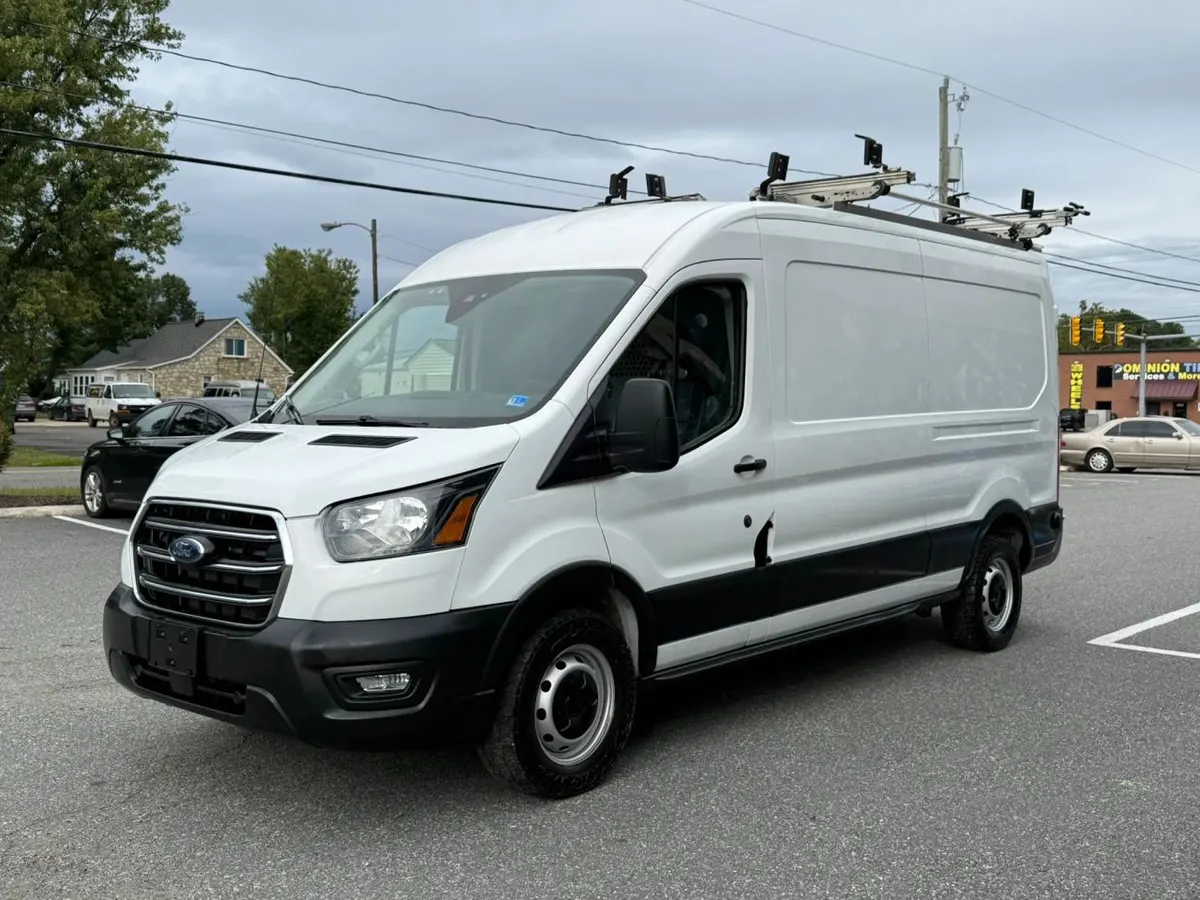
On the Transit, Ford’s same 2020 model year manual shows threaded mounting points in the roof, each closed with a plug, and says that when a roof rack comes off, its holes must be sealed with plugs or equivalent watertight parts. Whatever the van, look at the roof from inside around each mount for water stains or rust, and at the headliner if it has one. A rack also adds height: measure the van with the rack before a low garage or parking deck (the outside heights of each version are in sizes at a glance).
Partitions
A solid partition behind the seats keeps cargo out of the cab and blocks the view through the rear doors, so the outside mirrors (and a camera, if the van has one) are your view behind. Virginia’s inspection rejects a mirror that is cracked or loose, or that doesn’t show the road 200 ft behind. Check that the partition is bolted tight and doesn’t rattle, and that both seats still slide and recline as far as you need.
Inspection checklist
These are the 26 checks that matter most on a used work van, in the order you’d do them walking around it. Tap each one as you go, or print the list. For the car-side basics (under the hood, the interior, the title), use the used car inspection checklist too.
Used cargo van inspection checklist: 26 checks. Mix Cars, mixcars.net
0 of 26 checked
Where the checks come from: NHTSA says tires should be replaced when the tread is worn to 2/32 in, and the last four digits of the tire’s code give the week and year it was made; it lists irregular wear from overloading as a reason to replace a tire. Ford’s manual explains that some warning lamps light when you start the van to show they work, and any that stay on point to a problem. Ram tells ProMaster owners to lubricate the door hinge pivots twice a year to prevent premature wear; on a van whose rear doors open dozens of times a day, the hinges show how it was looked after. The gear check on the test drive is how the shift cable recall on 2014–2019 ProMasters with the 3.6L V6 shows itself: NHTSA campaign 20V-036 describes a gear lever that doesn’t match the gear the transmission is in.
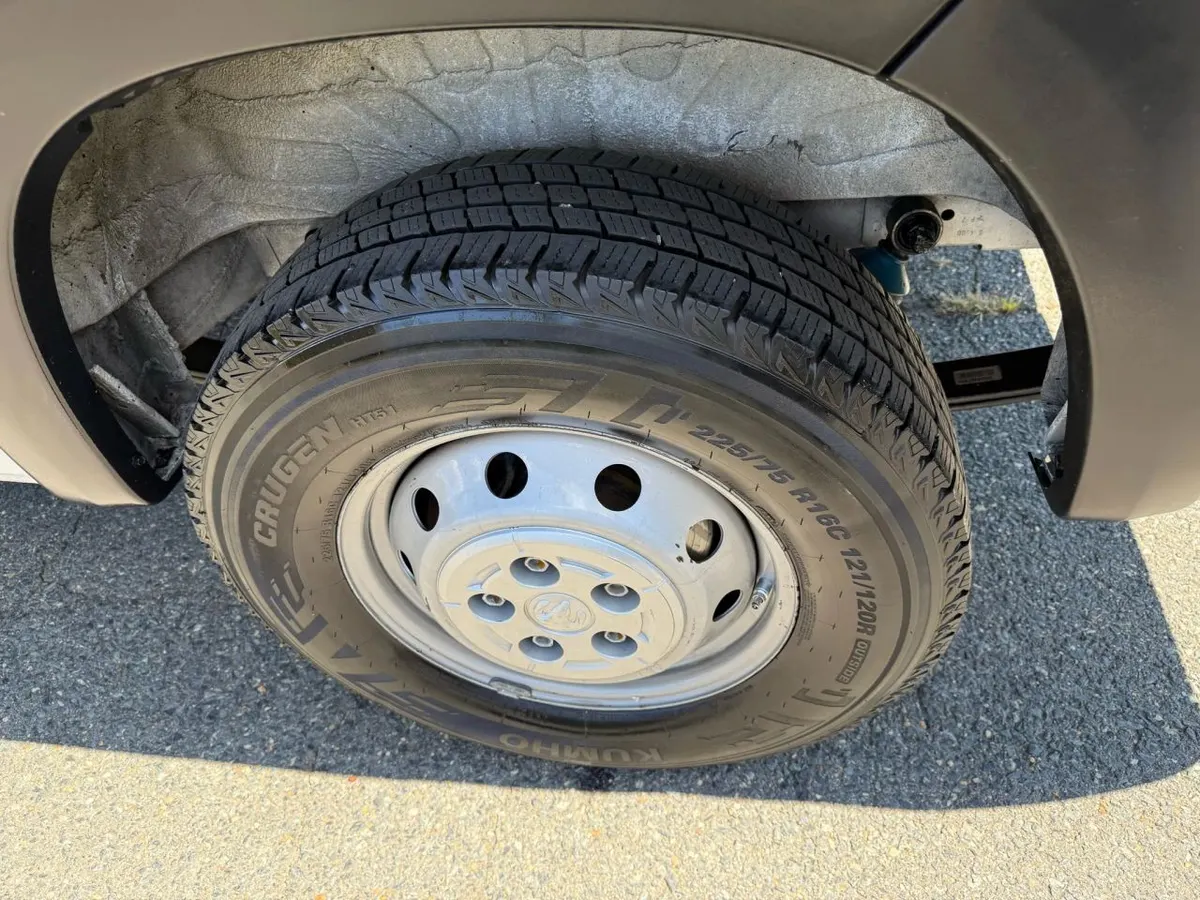
The load index on the sidewall, the number after the size, says how much weight each tire can support. On a van that carries its payload every day, check that the tires match the size on the door-pillar label and that none was swapped for a lighter-rated one.
The checklist is a buyer’s walk-around, not a mechanic’s inspection. On any van you’re serious about, pay an independent mechanic to put it on a lift and look at the underside, the brakes and the frame, which a walk-around can’t show you.
Virginia inspection and emissions
Every van registered in Virginia needs a safety inspection once a year. In the Northern Virginia emissions area, most vans also need an emissions test every two years. That rule follows where the van is registered or mainly kept, not where you buy it. Our lot is in Fredericksburg, south of the emissions area on I-95: a van you buy here and register in Fairfax County will most likely need a current passing emissions inspection to register there. The exceptions are below.
Emissions: which localities
The Virginia DMV lists 10 localities where vehicles need an emissions inspection: the counties of Arlington, Fairfax, Loudoun, Prince William and Stafford, and the cities of Alexandria, Fairfax, Falls Church, Manassas and Manassas Park (Virginia DMV, Emissions Inspections). The City of Fredericksburg and Spotsylvania County aren’t on the list; Stafford County is. A van that needs the test must pass it, or get a waiver, every two years to register or renew its registration.
Emissions: which vans
- Gas vans rated 10,000 lb gross vehicle weight (GVWR) or less and under 25 model years old. Every full-size gas ProMaster, Transit and Express version whose GVWR we list is rated between 8,550 and 9,600 lb for the model year we list, so each one is covered; the small vans are rated far lower.
- Diesel vans only if they are 1997 or newer and rated 8,500 lb GVWR or less, so a diesel rated above that isn’t tested. Read a diesel van’s own GVWR on its door-pillar label.
- Newer vans: the current and three previous model years are exempt. DEQ notes that DMV may still require a test on a newer van first titled in another state.
The same DEQ page lists what can get a van turned away before the test: unsafe tires, fluid leaks, exhaust leaks, visible smoke or a missing gas cap, all on the checklist above. For a van that has lived in Northern Virginia, you can see its last emissions inspection result by VIN on the Virginia Vehicle Inspection Program site. Under Virginia law, a passing result stays valid for two years from the end of the month it was issued, even if the van is sold.
The yearly safety inspection
The safety inspection applies everywhere in Virginia. The State Police say a vehicle must be reinspected at least once every twelve months, the sticker expires on the last day of the month shown on it, and a vehicle bought out of state must be inspected once it’s registered here. The van-specific items are the ones above: holes in the floor and the mirrors. What the inspection covers in full, and the costs of titling and registering, are in the used car inspection checklist and buying a car in Fredericksburg.
Browse every cargo van we have, or by model: the Transit, ProMaster and Express. For trucks as well as vans, see commercial vehicles. Paying over time is covered in work van loans with fair or bad credit and on our financing page; if you’re replacing a van, get a trade-in value.
Cargo vans on our lot now
Live from our lot at 4606 Harrison Rd, Fredericksburg. Updated every few hours.

2021 Ford Transit
Connect Cargo Van Xl
Est. $318/mo*
Details→
2022 Ford Transit
150 Cargo Van Low Roof W/rwb
Est. $397/mo*
Details→
2015 Ford Transit
Connect Cargo Xl
Est. $250/mo*
Details→
2018 Ford Transit
250 Van Low Roof W/60/40 Side Door W/lwb
Est. $375/mo*
Details→*Estimate only: 12.9% APR, 60 months, $1,000 down, with approved credit. Excludes the $799 dealer processing fee, taxes, tags and title.
Have a question about a used cargo van?
Questions people ask
Is a high-mileage cargo van worth buying?
It can be, if the records show the work its maker schedules at that mileage. On a 2018 Ford Transit, Ford’s normal schedule changes the engine coolant first at six years or 100,000 miles, the spark plugs on the gas engines every 100,000 miles (every 60,000 in delivery-type work) and the automatic transmission fluid and filter every 150,000 miles. Ram’s 2026 ProMaster handbook lists spark plugs at 100,000 miles and coolant at 10 years or 150,000 miles. A van past those points with no record of them is a van you budget those jobs for.
What are engine hours, and why do they matter on a work van?
Engine hours count the time the engine has run, idling included, so a van that idled at job sites can have far more running time than its miles suggest. Ram’s 2026 ProMaster handbook caps oil changes at 10,000 miles, 12 months or 350 hours of engine run time, whichever comes first, and says the hours matter mostly to fleets. Ford’s 2018 Transit manual lists an Engine Hours screen in the dash menu and a line for engine hours in its service records.
What should I check when buying a used cargo van?
The records first: service history, engine hours on a fleet van, and open recalls by VIN at nhtsa.gov/recalls. Then the van: the sliding door and its rollers, the rear door hinges, the floor and wheel wells for rust and unsealed bolt holes, the roof around any rack, tires and brakes, leaks, the warning lights at start-up, and a test drive with a cold start. An independent mechanic’s inspection is worth it on any van you’re serious about.
Do cargo vans need emissions testing in Northern Virginia?
Most do, if the van is registered or kept mainly in the counties of Arlington, Fairfax, Loudoun, Prince William and Stafford or the cities of Alexandria, Fairfax, Falls Church, Manassas and Manassas Park; other localities aren’t in the program. There, gas vans rated 10,000 lb GVWR or less and under 25 model years old, and 1997 or newer diesels rated 8,500 lb or less, need a passing test every two years to register or renew. Vans of the current and three previous model years are exempt.
If I buy a van in Fredericksburg but register it in Fairfax, does it need an emissions test?
Most likely, yes. The test follows where the van is registered or mainly kept, not where you buy it. Fairfax County is in the emissions area; the City of Fredericksburg and Spotsylvania County are not. A van registered in the emissions area needs a passing test or waiver to register or renew there, unless it’s one of the four newest model years, or a diesel rated over 8,500 lb GVWR.
How can I check a van’s emissions inspection record?
Enter its 17-character VIN on the Virginia Vehicle Inspection Program’s lookup (virginiavip.org), which the Virginia DEQ links to: it shows the last emissions inspection result on file for that vehicle.
Will holes from old shelving fail a Virginia safety inspection?
They can. Virginia’s inspection rules reject a floor pan or inner side panels with holes, other than normal drain holes, that let exhaust into the cab or cargo area, or a floor rusted through. A hole repaired by welding, or with a metal patch riveted, screwed or welded on, is allowed.
Should I buy a cargo van that still has shelving or a ladder rack?
If the setup fits your work, it saves you buying and fitting one. Check that it’s bolted tight, that its weight leaves you enough payload under the limit on the driver’s door pillar label, and that a roof rack’s mounts don’t leak. If you’ll take it out, plan on sealing every hole it leaves.