The short answer
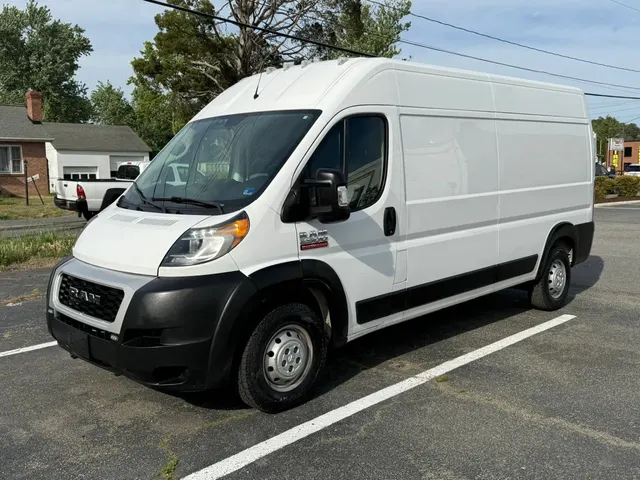
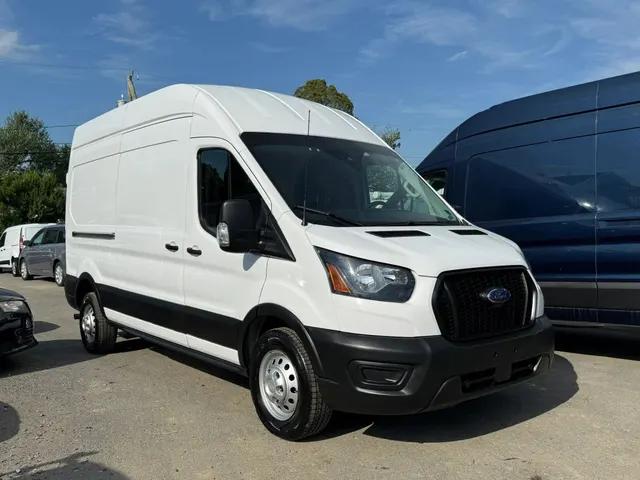
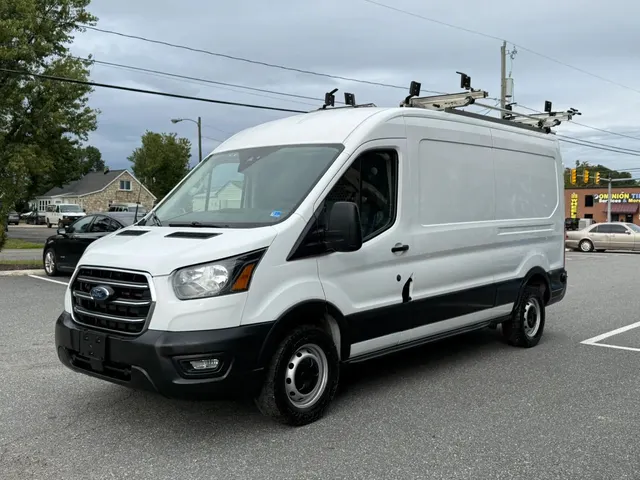
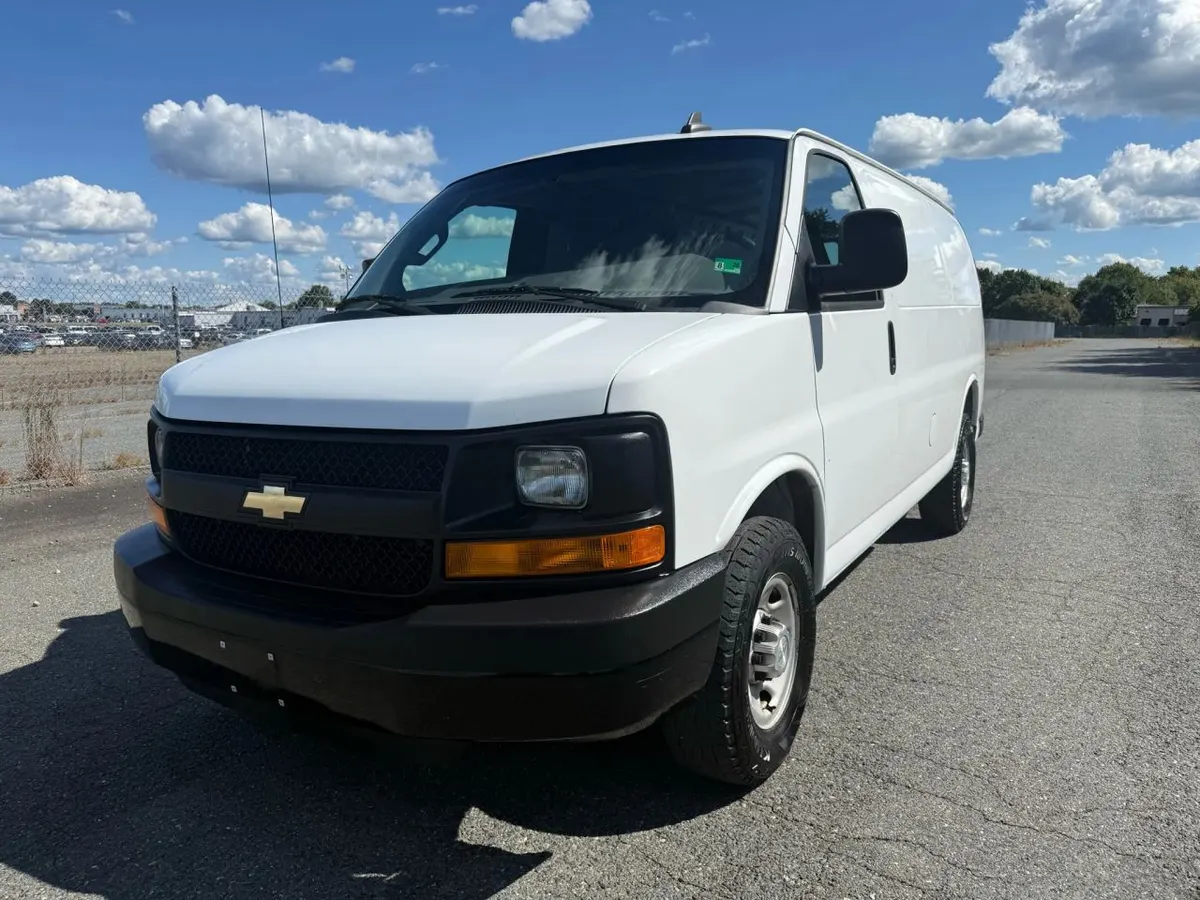
ProMaster for loading by hand and tight streets: the lowest floor, the most room between the wheel wells and the tightest turns. Transit for all-wheel drive (from 2020), three roofs since 2015 and the longest floor. Express for a V8 and a separate steel frame, in a low-roof van; you can’t stand up in it, and it turns the widest.
Whichever you buy used, check its VIN for open recalls: all three have had ones that matter.
Where each van wins
All three are full-size cargo vans sold for trade and delivery work, and each is built differently: the ProMaster drives its front wheels, the Transit and Express their rear wheels, and only the Express sits on a separate frame. The figures below compare the regular-length Express 2500, the Transit 250 medium roof on the 148 in wheelbase and the ProMaster 2500 high roof on the 159 in wheelbase, unless a line says otherwise. The ProMaster-against-Transit detail, by weight class and roof, is in RAM ProMaster vs Ford Transit.
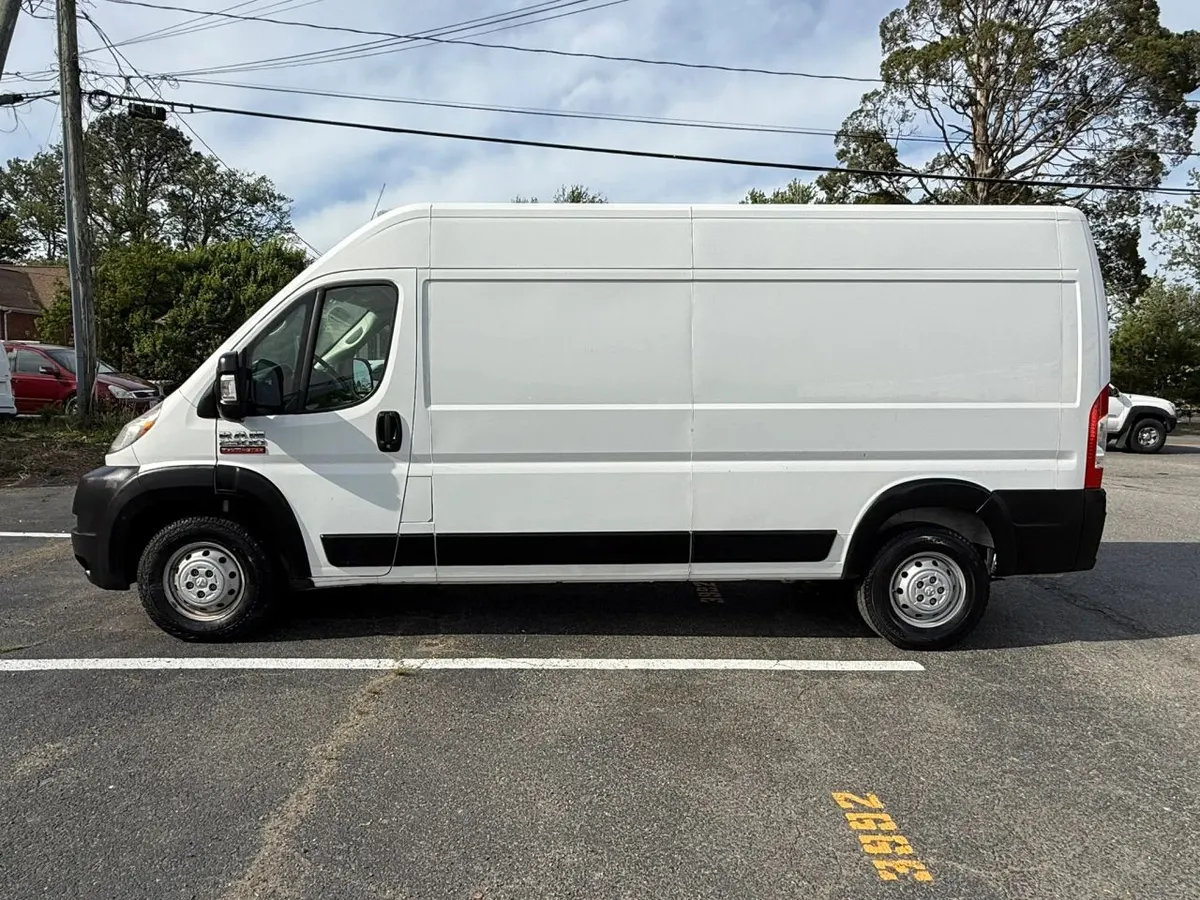
RAM ProMaster: the low, wide floor
- Lowest load floor: 21 in off the ground, against 28.0–28.9 in for the Transit and 27.8 in for a 2015–2019 Express (30.3 in for a 2022–2023 Express, as GM restated it). With front-wheel drive there is no driveshaft to the rear axle, so Ram could build the floor without the hump a rear-drive van needs.
- Most room between the wheel wells: 56 in, against 54.8 in (Transit) and 52.7 in (Express).
- Tightest turns: 46.8 ft, against 48 ft (Transit) and 49.2 ft (Express).
- Tallest roof, from 2023: the super high roof on the extended 3500, 86.4 in inside (Ram’s 2023 announcement).
- Gives up: all-wheel drive. Ram’s specifications list front-wheel drive only, through 2026. The engine is a 3.6-liter V6; early vans also offered a 3.0-liter four-cylinder diesel (Ram 2015 brochure).
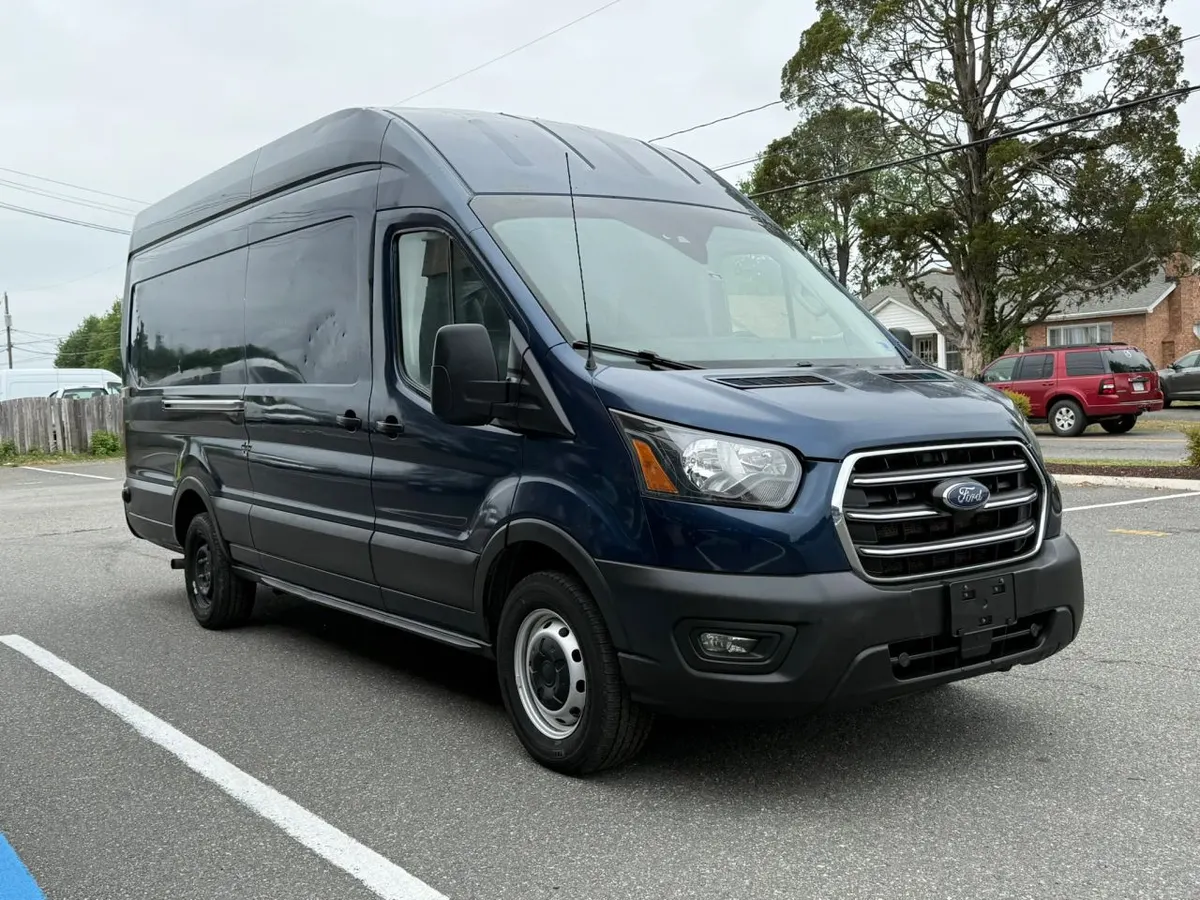
Ford Transit: all-wheel drive and three roofs
- All-wheel drive: optional from the 2020 model year and, among vans built from 2015 on, the only one of the three with it (GM offered it on the half-ton Express 1500 through 2014). Ford describes it as always on, with no change to the load floor or seat height.
- Three roof heights and an extended body: low, medium and high roofs. The extended high roof has the longest floor of any van here, 172.2 in, and was the tallest roof, 81.5 in inside, until the ProMaster’s 2023 super high roof.
- Engines: Ford launched it with a 3.7-liter V6, the 3.5-liter EcoBoost V6 or a 3.2-liter five-cylinder diesel, in place of the E-Series’ two V8s and a V10. From 2020 it’s a 3.5-liter V6 or the EcoBoost.
- Gives up: a higher floor than the ProMaster (28.0–28.9 in), and on the 148 in wheelbase a floor 0.3 in short of a 12 ft ladder.
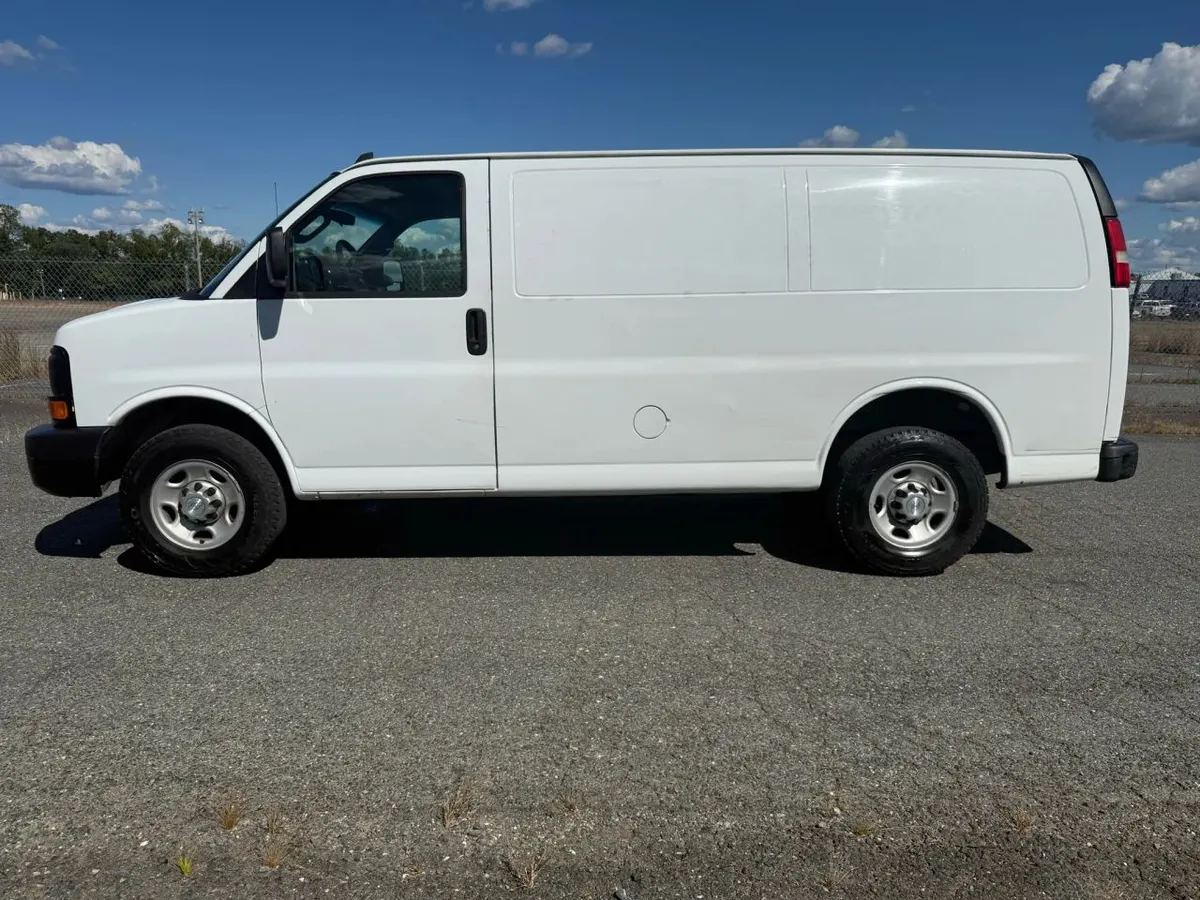
Chevrolet Express: frame, V8s and a long run
- A separate steel frame. GM introduced the Express for 1996 as a new generation of its full-size vans, with a high-strength steel ladder frame on 135 in and 155 in wheelbases. Its 2015–2019 cargo-van guides list the same two wheelbases and a full-length boxed frame. The Transit and ProMaster are unibody: Ford and Ram both say so, body and frame built as one structure.
- A long production run. GM’s 2023 guide still lists the 135 in and 155 in wheelbases the Express launched with in 1996, and Chevrolet still lists the Express Cargo for 2026.
- V8 and diesel engines. The only one of the three sold with a V8 (the engine list is below).
- Low and narrow outside: 84.6 in (7'1") tall, and 79.2 in wide without mirrors where the Transit and ProMaster are 81.3 in. A low-roof Transit is a little lower still (83.6 in); every ProMaster is taller.
- Gives up: standing room (52.9 in inside, one roof height in GM’s cargo-van guides), the narrowest floor (52.7 in between the wheel wells, still enough for a 48 in pallet or a 4 x 8 ft sheet), the widest turning circle (49.2 ft on the 135 in wheelbase, 54.5 ft on the 155 in), and all-wheel drive: GM lists the 2500 and 3500 cargo vans as rear-wheel drive (2015–2019 and 2022–2023). The half-ton Express 1500 offered all-wheel drive from 2003 through 2014, by the EPA’s fuel economy listings, and ended after 2014.
The Express’s engines, from GM’s own documents:
- 1996: a new family of V6 and V8 gas engines, with a turbocharged diesel available (GM 1996 information kit).
- 2000: five engine choices, the largest a 7.4-liter V8, and a 6.5-liter turbo diesel (GM 2000 information kit).
- 2015: a 4.8-liter V8 standard, a 6.0-liter V8 optional (including a compressed natural gas version), and a 6.6-liter Duramax turbo-diesel V8 (GM 2015 guide).
- 2017: the 6.6-liter diesel dropped and a 2.8-liter Duramax four-cylinder turbo diesel added late in the year (GM 2017 guide).
- 2018–2019: a 4.3-liter V6 standard, with the 6.0-liter V8 or the 2.8-liter diesel optional (GM 2018 guide).
- 2023: the 4.3-liter V6 or a 6.6-liter gas V8; the diesel was dropped (GM 2023 guide).
On a used Express, the engine it has decides the parts and service it needs, so check which one it is and ask for records that match it.
Sizes side by side
Inside, the ProMaster holds the most and the Express the least of these three; the Express is also the shortest, a regular-length van on the 135 in wheelbase. The long Express, on the 155 in wheelbase, has 284.4 cu ft and 146.2 in of floor.
| Specification | Express 2500 Cargo, 135" WB (2015–2019) | Transit 250 Medium Roof, 148" WB (2015–2019) | ProMaster 2500 High Roof, 159" WB (2014–2022) |
|---|---|---|---|
| Cargo volume (cu ft) | 239.71 | 357.12 | 420 (better)3 |
| Cargo length at floor (in) | 124.6 (10'4")1 | 143.7 (11'11")2 | 147 (12'3") (better)4 |
| Width between wheel wells (in) | 52.7 (4'4")1 | 54.8 (4'6")2 | 56 (4'8") (better)3 |
| Max interior height (in) | 52.9 (4'5")1 | 72 (6'0")2 | 77.1 (6'5") (better)5 |
| Load floor height (in) | 27.81 | 28.72 | 21 (better)6 |
| Max payload (lb) | 3,3237 | 3,7908 | 4,000 (better)9 |
| Turning circle (ft) | 49.21 | 482 | 46.8 (better)3 |
Bold marks the better figure in each row (lower is better for load floor height and turning circle).
- Chevrolet 2018 Express Cargo Van specification guide (GM Upfitter)
- Ford 2018 Transit specifications (Ford Body Builders Advisory Service)
- Ram 2022 ProMaster specifications (Stellantis media)
- Ram ProMaster Views & Charts, FCA US body builder instruction dated 06/12/2020 (ramtrucks.com). SAE L202-1, cargo length at floor behind the front row.
- Ram ProMaster Views & Charts, FCA US body builder instruction dated 06/12/2020 (ramtrucks.com). SAE H505, maximum cargo height.
- Ram 2015 ProMaster brochure (ramtrucks.com)
- Chevrolet 2019 Express Cargo Van specification guide (GM Upfitter). 2019 model year, gas engine, 8,600 lb GVWR.
- Ford 2019 Transit specifications (Ford Body Builders Advisory Service). 2019 model year, 3.7L gas, 9,000 lb GVWR.
- Ram 2022 ProMaster weight and tow chart, Stellantis body builder instruction dated 21/10/2021 (ramtrucks.com). 2022 model year, 3.6L V6 gas, 8,900 lb GVWR.
Outside dimensions
For a garage door, a parking deck or a narrow alley. The Express and the low-roof Transit are the low ones, under 7 ft 1 in; every ProMaster version stands taller, 91.7 in even with the low roof. Under an 8 ft (96 in) clearance, of the three in the table above only the Express fits as built.
| Van | Length (in) | Width without mirrors (in) | Height (in) |
|---|---|---|---|
| Express 2500 Cargo, 135" WB (2015–2019) | 224.1118'9" | 79.216'8" | 84.627'1" |
| Express 3500 Cargo, 155" WB (2015–2019) | 244.1120'5" | 79.216'8" | 84.127'1" |
| Transit 150 Low Roof, 130" WB (2015–2019) | 219.9318'4" | 81.336'10" | 83.637'0" |
| Transit 250 Medium Roof, 148" WB (2015–2019) | 235.5319'8" | 81.336'10" | 100.738'5" |
| ProMaster 1500 Low Roof, 118" WB (2014–2022) | 195.4416'4" | 81.356'10" | 91.767'8" |
| ProMaster 2500 High Roof, 159" WB (2014–2022) | 236.2419'9" | 81.356'10" | 102.178'7" |
As each maker publishes them, for the van as built. Feet and inches are rounded up. Roof racks, ladder racks and upfits add to the height.
- Chevrolet 2018 Express Cargo Van specification guide (GM Upfitter)
- Chevrolet 2018 Express Cargo Van specification guide (GM Upfitter). overall height at the roof, at base curb weight.
- Ford 2018 Transit specifications (Ford Body Builders Advisory Service)
- Ram ProMaster Views & Charts, FCA US body builder instruction dated 06/12/2020 (ramtrucks.com). SAE L103, overall body length.
- Ram ProMaster Views & Charts, FCA US body builder instruction dated 06/12/2020 (ramtrucks.com). SAE W103, maximum vehicle width without mirrors.
- Ram ProMaster Views & Charts, FCA US body builder instruction dated 06/12/2020 (ramtrucks.com). SAE H101, maximum overall height.
- Ram ProMaster Views & Charts, FCA US body builder instruction dated 06/12/2020 (ramtrucks.com). SAE H101, maximum overall height; Ram's 2015 brochure prints 101.0 in and its 2022 specifications 105.9 in body height for every high roof.
Pallets and a 12 ft ladder
The long versions of all three take three standard 48 x 40 in pallets, one per row. For a 12 ft ladder, which needs 144 in of floor, the long Express and the ProMaster 159 have room; the Transit 148 comes up 0.3 in short.
Floor between the wheel wells, drawn to scale. Pallets are 48 x 40 in. The front wall is at the left; the 12 ft ladder is drawn beside the floor from the front wall, and fits if it ends before the rear doors.
Sources
- Chevrolet 2018 Express Cargo Van specification guide (GM Upfitter)
- Ford 2018 Transit specifications (Ford Body Builders Advisory Service)
- Ram ProMaster Views & Charts, FCA US body builder instruction dated 06/12/2020 (ramtrucks.com). SAE L202-1, cargo length at floor behind the front row.
- Ram 2022 ProMaster specifications (Stellantis media)
- Express 155 (146.2 in): three pallets and a 12 ft ladder, with 2.2 in to spare. Between the wheel wells it has 52.7 in, room for one pallet across but not two.
- Express 135 (124.6 in): also three pallets, turned with the 48 in side across the van (120 in end to end), and a 10 ft ladder.
- Extended Transit and ProMaster: four pallets each and a 12 ft ladder; see the ProMaster and Transit floor plans.
A 4 x 8 ft sheet of plywood or drywall lies flat between the wheel wells in all three.
Standing room
A 5 ft 10 in person stoops in any Express and stands up in a medium-roof Transit or a high-roof ProMaster. If you’ll work inside the van, at a bench or at shelving, rule the Express out.
Maximum interior height as each maker publishes it, drawn to scale, with a 5'10" person standing inside. Headroom is measured to the top of the head.
Sources
- Chevrolet 2018 Express Cargo Van specification guide (GM Upfitter)
- Ford 2018 Transit specifications (Ford Body Builders Advisory Service)
- Ram ProMaster Views & Charts, FCA US body builder instruction dated 06/12/2020 (ramtrucks.com). SAE H505, maximum cargo height.
- Ram 2025 ProMaster fleet buyer's guide (Stellantis Fleet, archived). Ram's maximum cargo height; the 2023 and 2024 guides print the same.
The Transit comes with three roofs, the ProMaster with two through 2022 and a third, the super high roof, on the extended 3500 from 2023. GM’s cargo-van guides list one roof height for the Express. Among vans built before 2023 the tallest is the high-roof Transit, 81.5 in inside against 77.1 in for the high-roof ProMaster.
Payload
Payload is what the van may carry in people and cargo: its gross vehicle weight rating (GVWR) minus its own weight. It changes year to year, so each bar names the model year it was published for.
Maximum payload as published by the maker, bars drawn from zero on one scale. Payload changes from year to year, so under each bar is the model year and version the figure was published for.
- 2500 and 250 class: up to 3,323 lb for a 2019 Express 2500 (135 in), 3,790 lb for a 2019 Transit 250 medium roof (148 in) and 4,000 lb for a 2022 ProMaster 2500 high roof (159 in).
- 3500 and 350 class: up to 4,066 lb for a 2019 Express 3500 (155 in), 4,000 lb for a 2019 Transit 350 extended high roof and 4,430 lb for a 2022 ProMaster 3500 extended.
In the same model year, 2019, the Express 2500 was rated below the Transit 250 and the Express 3500 a little above the extended Transit 350. None of these has an official fuel economy figure: the EPA exempts cargo vans over 8,500 lb GVWR from testing, and every version in the chart is rated heavier (the lightest at 8,600 lb). What a specific van can carry is printed on the tire and loading label federal rules require on its driver’s door pillar. Shelving, racks and a partition count against it.
Reliability and what to check
None of the three has a clean record, and no badge here is reliable or unreliable on its own: a used van is as good as its maintenance and its recall repairs. Enter the VIN of any van you’re considering at nhtsa.gov/recalls: it lists the safety recalls not yet repaired on that van.
Chevrolet Express
2014–2017 with power windows · NHTSA 18V-295
Liquid can leak into the driver’s power window switch and corrode it, raising its electrical resistance: a fire risk.
Fix: A new driver’s window switch.
2021 with the 6.6-liter gas V8 · NHTSA 21V-189
The positive battery cable terminals can touch a fuse block post and short-circuit: a fire risk. Until the repair, GM told owners to park outside and away from buildings.
Fix: Part of an anti-rotation tab on each positive cable terminal is removed, or the cable replaced if an earlier repair took off too much.
2022–2023 · NHTSA 24V-839
Wrong software in the transmission control module can cause harsh shifting, reduced power, sudden slowing, rear-wheel lockup, or the van moving in a direction the driver didn’t select.
Fix: A transmission control module software update. Owner letters went out in December 2024.
RAM ProMaster and Ford Transit
The recalls to check on these two, with every fix, are listed in the ProMaster vs Transit comparison. The ones that can let a parked van roll away: on the ProMaster, the shift cable on 2014–2019 vans with the 3.6-liter V6 (20V-036) and the park pawl on 2019–2021 vans (23V-301); on the Transit, the driveshaft coupling on every 2015–2017 van (17V-408 and 19V-767).
What else to inspect on any used work van is in the used cargo van buyer’s guide.
Which one for your work
- Boxes, appliances, pallets loaded by hand: the ProMaster, for its 21 in floor and the most width.
- Ladders, pipe, lumber: a ProMaster 159, a long Express or an extended Transit or ProMaster; the Transit 148 falls just short of a 12 ft ladder.
- Working inside, standing up: a high-roof Transit or ProMaster, not an Express.
- Winter roads and muddy sites: a 2020 or newer Transit with all-wheel drive, or an older Express 1500 with it (2003–2014).
- Tight streets and parking lots: the ProMaster; the Express turns the widest.
- A V8, a separate frame, or a low door to fit under: the Express, or a low-roof Transit for the door.
Three questions narrow it down, with the matching vans on our lot:
Answer all three to see which van fits, and the ones on our lot.
Browse every cargo van we have, or just the Transits, Expresses and ProMasters. For work trucks too, see commercial vehicles. Smaller vans and picks by job are in the best used cargo vans for small business. If you’re financing, start with our financing page; if you have a van to replace, get a trade-in value.
Transits, Expresses and ProMasters on our lot now
Live from our lot at 4606 Harrison Rd, Fredericksburg. Updated every few hours.

2022 Ford Transit
150 Cargo Van Low Roof W/rwb
Est. $397/mo*
Details→
2018 Ford Transit
250 Van Low Roof W/60/40 Side Door W/lwb
Est. $375/mo*
Details→
2025 Ram Promaster
Cargo Van 2500 Tradesman Low Roof
Est. $556/mo*
Details→
2019 Ford Transit
250 Van Low Roof W/60/40 Side Door W/lwb
Est. $352/mo*
Details→*Estimate only: 12.9% APR, 60 months, $1,000 down, with approved credit. Excludes the $799 dealer processing fee, taxes, tags and title.
Have a question about a full-size work van?
Questions people ask
What vans are similar to the Ford Transit?
The other two full-size cargo vans compared here: the RAM ProMaster, with a lower floor (21 in) and front-wheel drive, and the Chevrolet Express, with a separate steel frame and a low roof. GMC sells the Savana alongside the Express, and GM’s recalls cover both. Other full-size vans you’ll see used include the Mercedes-Benz Sprinter (also sold as a Freightliner), the Nissan NV (2012–2021 model years) and Ford’s older E-Series, which this comparison doesn’t cover. If a full-size van is more than you need, the Ford Transit Connect, RAM ProMaster City and Nissan NV200 are the small cargo vans.
Which is the best van for traveling long distances?
It depends who and what rides along. For a crew, a Transit or Express passenger van: both were built with rows of rear seats. For winter roads, a 2020 or newer Transit with all-wheel drive, or a 2003–2014 Express 1500 with it. To sleep in or stand up in, a high-roof Transit or ProMaster, not the Express (52.9 in inside). Fuel economy can’t settle it: cargo vans over 8,500 lb GVWR are exempt from EPA testing, and every version here is rated heavier, so none has an official figure.
Is the Chevy Express body-on-frame?
Yes. GM introduced it for 1996 with a high-strength steel ladder frame, and its 2015–2019 cargo-van guides list a full-length boxed frame. The Ford Transit and RAM ProMaster are unibody vans, with the body and frame built as one structure.
Can you stand up in a Chevy Express?
Not if you’re average height. GM lists 52.9 in of cargo height on the 135 in wheelbase and 53.4 in on the 155 in (2015–2019), and its cargo-van guides offer one roof height. A 5 ft 10 in person can stand in a medium-roof Transit (72 in) or a high-roof ProMaster (77.1 in).
How big is a Chevy Express cargo van?
Outside, 224.1 in long on the 135 in wheelbase and 244.1 in on the 155 in, 79.2 in wide without mirrors and 84.6 in tall (GM’s 2015–2019 figures). Inside, the 135 in wheelbase gives 239.7 cu ft, 124.6 in of floor and 52.7 in between the wheel wells; the 155 in gives 284.4 cu ft and 146.2 in of floor.
Does the Chevy Express come with a V8?
Yes, in every year the GM documents cited here cover. GM launched it for 1996 with V6 and V8 engines and a turbo diesel; in 2015 a 4.8-liter V8 was standard with a 6.0-liter V8 and a 6.6-liter Duramax diesel V8 offered; from 2018 a 4.3-liter V6 became standard with the 6.0-liter V8 optional; GM’s 2023 guide lists the 4.3-liter V6 or a 6.6-liter gas V8. Ford launched the Transit with V6s and a five-cylinder diesel, and the ProMaster has a V6 or, early on, a four-cylinder diesel.
Which of the three has all-wheel drive?
Among vans built from the 2015 model year on, only the Transit, as an option from 2020. Ram’s specifications list front-wheel drive only for every ProMaster through 2026, and GM’s cargo-van guides list rear-wheel drive only for the Express 2500 and 3500 (2015–2019 and 2022–2023). Before that, GM offered all-wheel drive on the half-ton Express 1500, from the 2003 through the 2014 model year; GM built no Express 1500 after 2014.
Which carries the most?
By the published maximums, the ProMaster in each class: up to 4,000 lb for a 2022 ProMaster 2500 on the 159 in wheelbase and 4,430 lb for a 2022 3500 extended. In 2019 figures, the Express 3500 on the 155 in wheelbase was rated up to 4,066 lb, a little more than the extended high-roof Transit 350 (4,000 lb). The limit for a specific van is on its driver’s door pillar label.
Which of the three takes a 12 ft ladder?
The long Express (146.2 in of floor on the 155 in wheelbase) and the ProMaster on the 159 in wheelbase (147 in) both do. In a Transit on the 148 in wheelbase it doesn’t quite fit: the floor is 0.3 in short. The regular Express (124.6 in) takes a 10 ft ladder.